
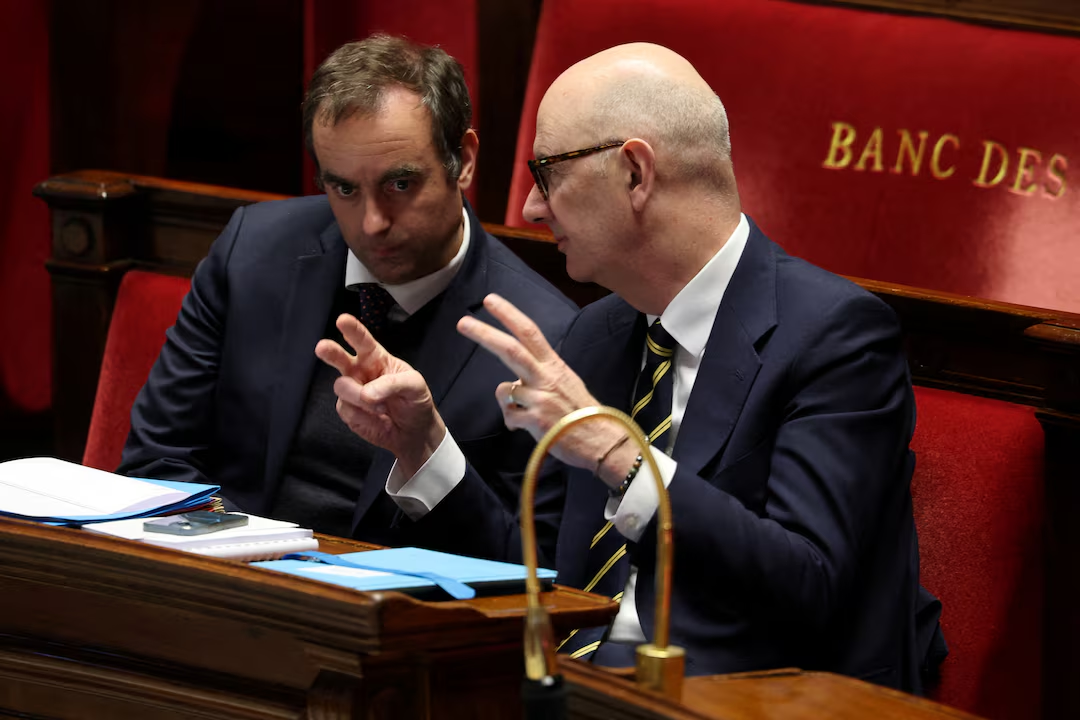
France is edging closer to passing its 2026 national budget after Prime Minister Sébastien Lecornu unveiled a package of concessions designed to win support from key Socialist lawmakers without alienating conservative allies. The move marks a critical moment in Paris’s political scene, where continuing deadlock had delayed the budget into mid-January and raised fears of government instability.
According to senior Socialist lawmaker Boris Vallaud, the government’s revised proposal — which includes measures to protect pension tax relief and raise a monthly income supplement for low-income households — has tempered opposition and opened the door to broader backing in the National Assembly. The concessions also expand social support in areas such as student meals and affordable housing.
For Prime Minister Lecornu, who leads a government without a clear parliamentary majority, the strategic shift has been necessary to avoid a direct clash with Socialist Party members and stave off the risk of a no-confidence vote that could bring down the government. Vallaud indicated that while his party still has reservations on issues such as wealth taxation and corporate holding-company levies, the latest commitments are sufficient to keep the budget process moving — provided further assurances are delivered.
The political dynamics are delicate. Lecornu’s government initially struggled to secure broad support for the 2026 budget, forcing interim stop-gap spending measures and drawing criticism from both the political left and right. The inability to finalise the budget in late 2025 highlighted the fractured nature of French politics since the 2024 legislative elections, which left the centrist coalition without a majority.
To fund the expanded social commitments, the revised plan extends a corporate surtax on large firms through 2026 — a move expected to raise roughly €8 billion but which has drawn mixed reactions from business groups and investment analysts concerned about its potential impact on corporate confidence and capital investment for the coming year.
Despite the progress, the government still faces procedural hurdles. Officials acknowledged that traditional parliamentary approval may remain elusive, potentially forcing the use of Article 49.3 of the French Constitution, which allows the executive to adopt budget legislation without a vote. Though this measure circumvents parliamentary approval, it carries the risk of triggering a confidence vote that could topple the cabinet — an outcome that officials are keen to avoid.
Economists and political commentators say that securing a budget deal — even a negotiated one — would provide much-needed stability for Europe’s second-largest economy, which has been buffeted by political fragmentation, global supply chain pressures, and domestic economic concerns. With social spending commitments and tax adjustments now on the table, observers say the government’s ability to balance fiscal responsibility with political pragmatism could define France’s economic trajectory in 2026.