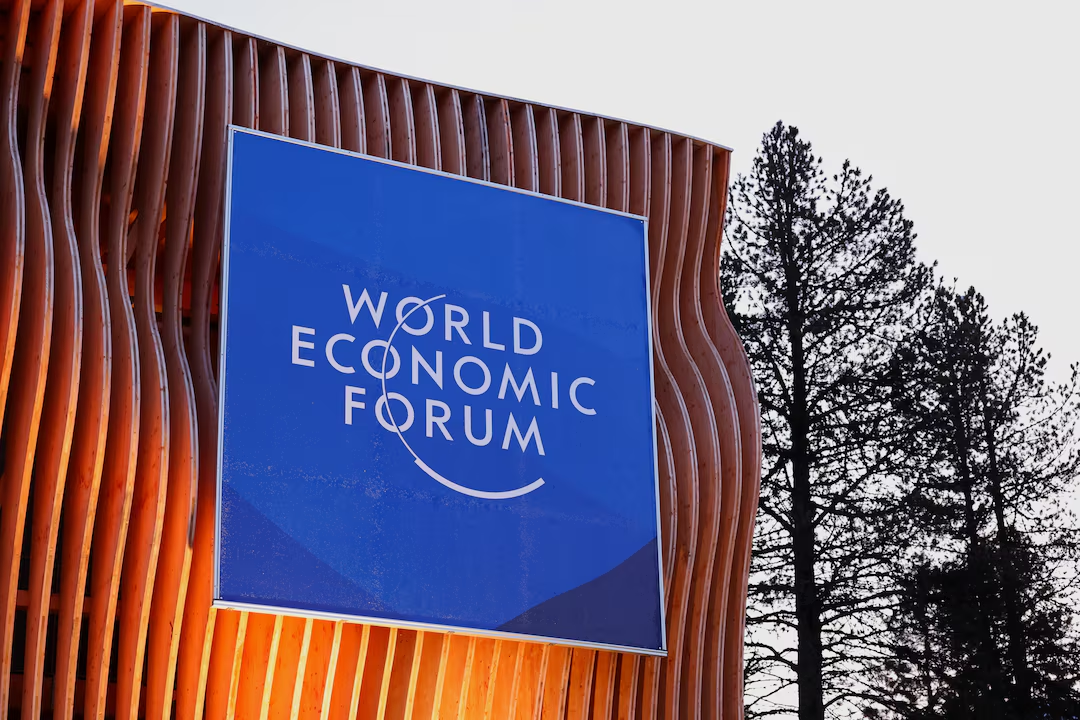
U.S. President Donald Trump is poised to engage directly with top global business leaders this week at the World Economic Forum (WEF) in Davos, Switzerland, in a meeting that local hosts and international attendees alike expect to shape the economic and policy agenda at one of the year’s most influential gatherings of corporate executives and heads of state.
According to sources familiar with the matter, Trump is scheduled to hold discussions with chief executive officers from a broad range of sectors — including banking, technology, consulting, and emerging industries such as cryptocurrency — as part of a special session framed around U.S. policy initiatives and international economic strategy. Invitations to attend the reception and meetings were reportedly extended by the White House to a select group of executives, signalling a deliberate effort by the administration to reinforce ties with the global private sector.
The summit is taking place amid significant geopolitical and trade developments. Trump’s recent policy actions — including controversial tariff threats aimed at European nations and bold stances on Arctic territory — have made U.S. foreign and economic policy a focal point of discussion at the Forum. Business leaders and policymakers are keen to interpret the implications of these moves for global markets, investment flows and cross-border cooperation, especially as inflation, supply chain adaptability, and digital innovation remain top priorities for international firms.
Trump is expected to deliver a formal address to the assembled delegates, which will include more than 3,000 participants from over 130 countries, according to event organisers. This year’s attendance roster features a record number of political leaders and business figures, reflecting the Forum’s enduring appeal as a platform for high-level dialogue — even as public debate surrounds the direction of globalisation and economic integration.
Joining Trump in Switzerland will be a U.S. delegation of senior officials including Treasury Secretary Scott Bessent and other Cabinet-level advisers, who are expected to accompany the president and participate in policy briefings and informal roundtables. Diplomats and corporate executives have signalled that these interactions will offer crucial opportunities to clarify Washington’s economic priorities and to address investor concerns about regulatory shifts and trade policy uncertainties.
Meanwhile, some European business leaders are also scheduled to meet with Trump’s delegation, including Russia’s Presidential envoy Kirill Dmitriev, whose presence reflects ongoing efforts to address geopolitical tensions and pursue dialogue on matters ranging from investment cooperation to strategic stability.
As the Forum progresses, analysts say the outcome of Trump’s engagements with global CEOs could influence investor confidence and corporate strategy well beyond Davos — particularly if clear signals emerge on taxation, trade policy, and technology regulation that affect multinational operations.