
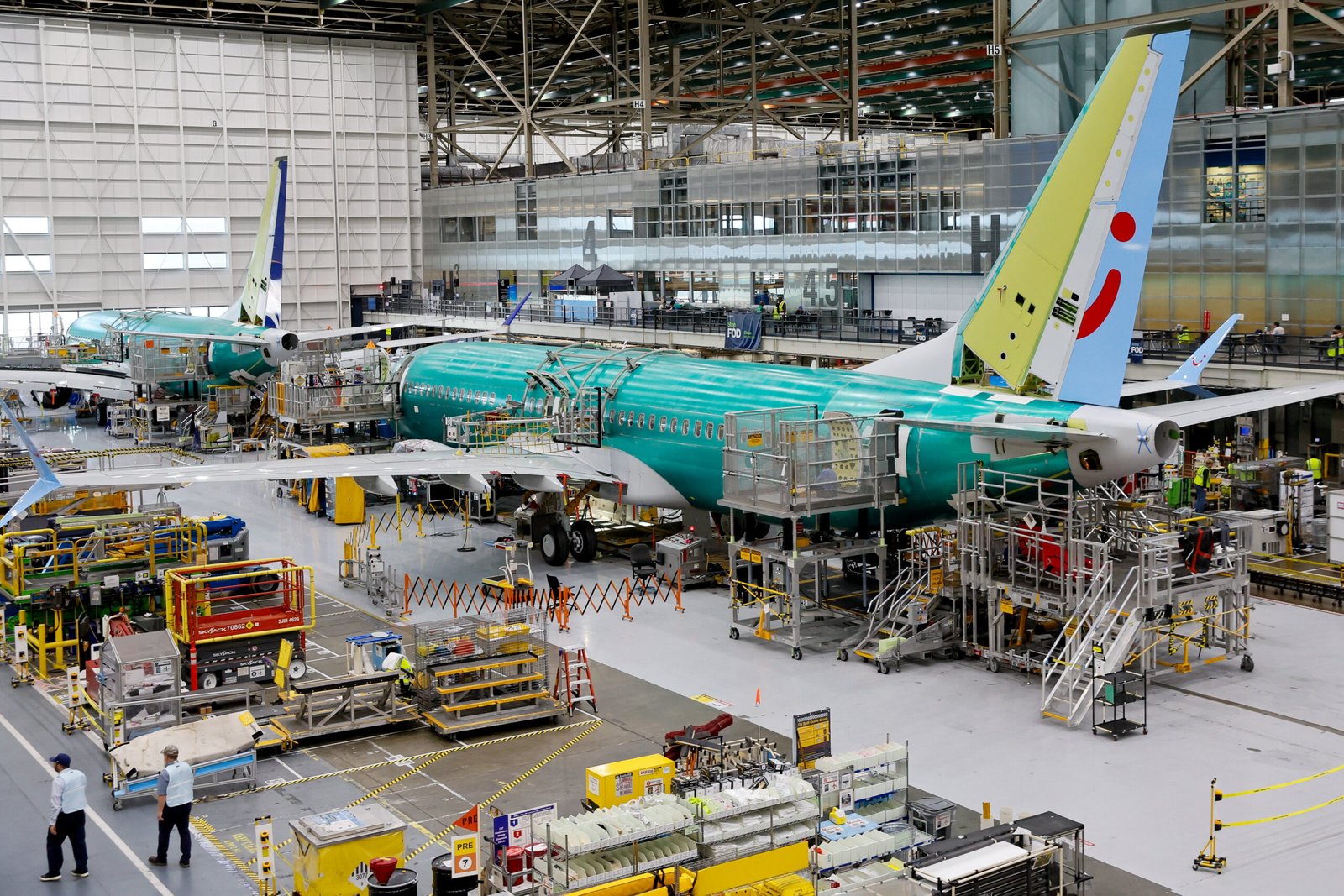
Boeing is facing renewed delivery delays as ongoing supply chain disruptions continue to hamper aircraft production, highlighting persistent challenges for one of the world’s largest aerospace manufacturers. According to recent reporting, shortages of key components and delays from suppliers have slowed output across several commercial aircraft programs, complicating Boeing’s efforts to stabilise production schedules and rebuild customer confidence.
Executives at the U.S. plane maker acknowledged that while progress has been made in improving manufacturing quality and oversight, supply chain fragility remains a major constraint. Several tier-one and tier-two suppliers are still struggling with labour shortages, rising costs, and logistical bottlenecks, limiting their ability to deliver parts on time. These issues have created knock-on effects across Boeing’s assembly lines.
Airlines waiting for new aircraft have expressed growing frustration, as delayed deliveries impact fleet expansion and route planning. With global air travel demand remaining strong, carriers are eager to take delivery of fuel-efficient jets to replace ageing fleets. Industry analysts note that prolonged delays could pressure airline profitability and exacerbate capacity constraints in key markets.
Boeing’s challenges also come at a sensitive time for the company’s financial recovery. Slower deliveries affect cash flow, as aircraft sales generate revenue primarily upon handover. While Boeing has secured a strong order backlog, converting those orders into delivered aircraft remains critical to restoring long-term financial stability.
The company has been working closely with regulators and suppliers to address production issues, including increased inspections and tighter quality controls. However, analysts warn that rebuilding a resilient aerospace supply chain is a complex process that may take several years, particularly following the disruptions caused by the pandemic and subsequent economic volatility.
From a broader business perspective, Boeing’s situation underscores how global manufacturers remain exposed to supply chain risks even as demand recovers. Companies across industries are reassessing supplier diversification and inventory strategies to reduce vulnerability to similar disruptions.
Looking ahead, Boeing has said it remains committed to gradual production increases once supplier performance improves. Investors and airline customers alike will be watching closely for signs that the company can deliver consistently and regain momentum in an industry where reliability is paramount.